The cosmetic file
GHK-Cu skin results
The percentages become interesting once the outcome is written out in full.
Procollagen in treated subjects
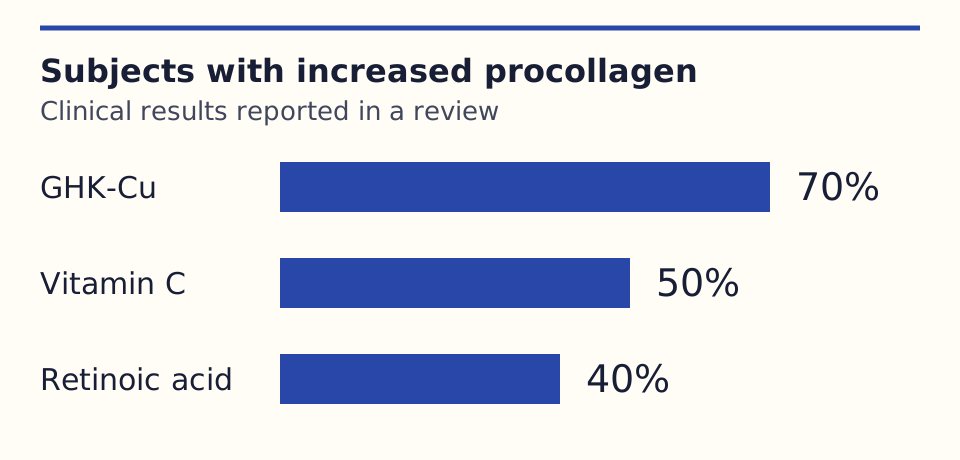
The anti-wrinkle review reports increased procollagen synthesis in 70% of GHK-Cu-treated subjects, compared with 50% for vitamin C and 40% for retinoic acid. These percentages describe the share of subjects showing the outcome. They do not describe how much extra collagen each person made.
That distinction rescues the comparison from a much louder interpretation. It gives no amount of wrinkle reduction to attach to those same percentages.
Nor does the comparison settle my preference between ingredients. The attractive question here is narrower: in the study reported by the review, how often did procollagen synthesis increase? The bars below answer that question and stop there.
Fine lines, laxity and density
The skin-regeneration review describes placebo-controlled improvements in skin laxity, clarity, fine lines, wrinkle depth and density. These are closer to the reasons an aesthetics reader might be interested in the first place.
The account encourages me, especially where it stays close to individual outcomes. I resist flattening those outcomes into ‘younger skin’. Fine lines, tissue density and clarity are different observations, and I would rather retain their separate names than give the result a more flattering face.
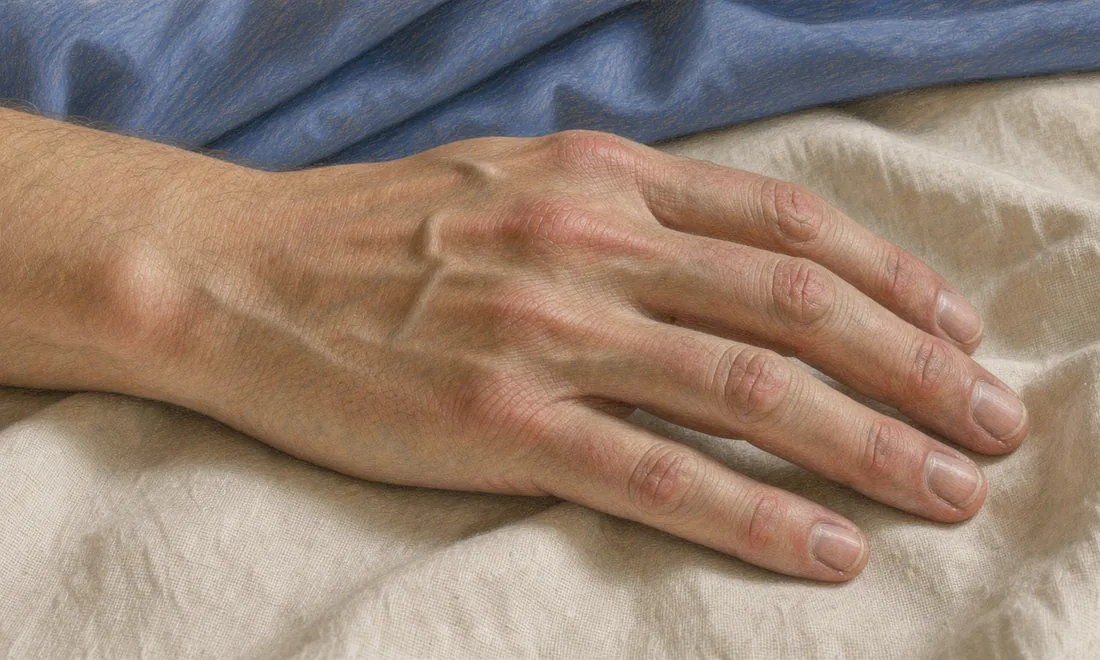
For my purposes, ordinary skin is as absorbing as the laboratory language. Creases and texture are the subject of aesthetic interest; the illustration here simply gives that surface some room. It represents no participant, before-and-after comparison or measured response.
How long a change lasts
Evermore puts duration on the table. These results leave the persistence of a cosmetic change after treatment ends unanswered here. My ideal follow-up would make that question its main business.
My enthusiasm is therefore local: collagen-related outcomes in treated subjects, and the appearance findings described in the review. The most expansive part of the name remains a question. A durable change would justify my excitement.
There is another practical wrinkle before the outcome can even be measured. The topical review identifies poor passage through the outer skin barrier as a delivery problem for GHK. The skin-delivery file takes that problem out of the background and follows a particular experiment.